Subsidy SetuMSME subsidy and compliance

Subsidy · project reports · tax and compliance

MSME subsidy and compliance support for Haryana, Punjab, Rajasthan and Uttar Pradesh

Find the government schemes your unit can claim, get the project report and the application prepared, and keep GST, income tax and notices in order, with one team.

Notified 29 July 2026 · Haryana

Haryana MSME Policy 2026: capital subsidy 15–30%

The rate depends on your site’s area category: Core, Intermediate, Sub-Prime or Prime/Focus. It applies to thrust-sector manufacturing MSMEs, on eligible capital investment.

  • Core 15% up to ₹2 crore; Prime/Focus 30% up to ₹4 crore

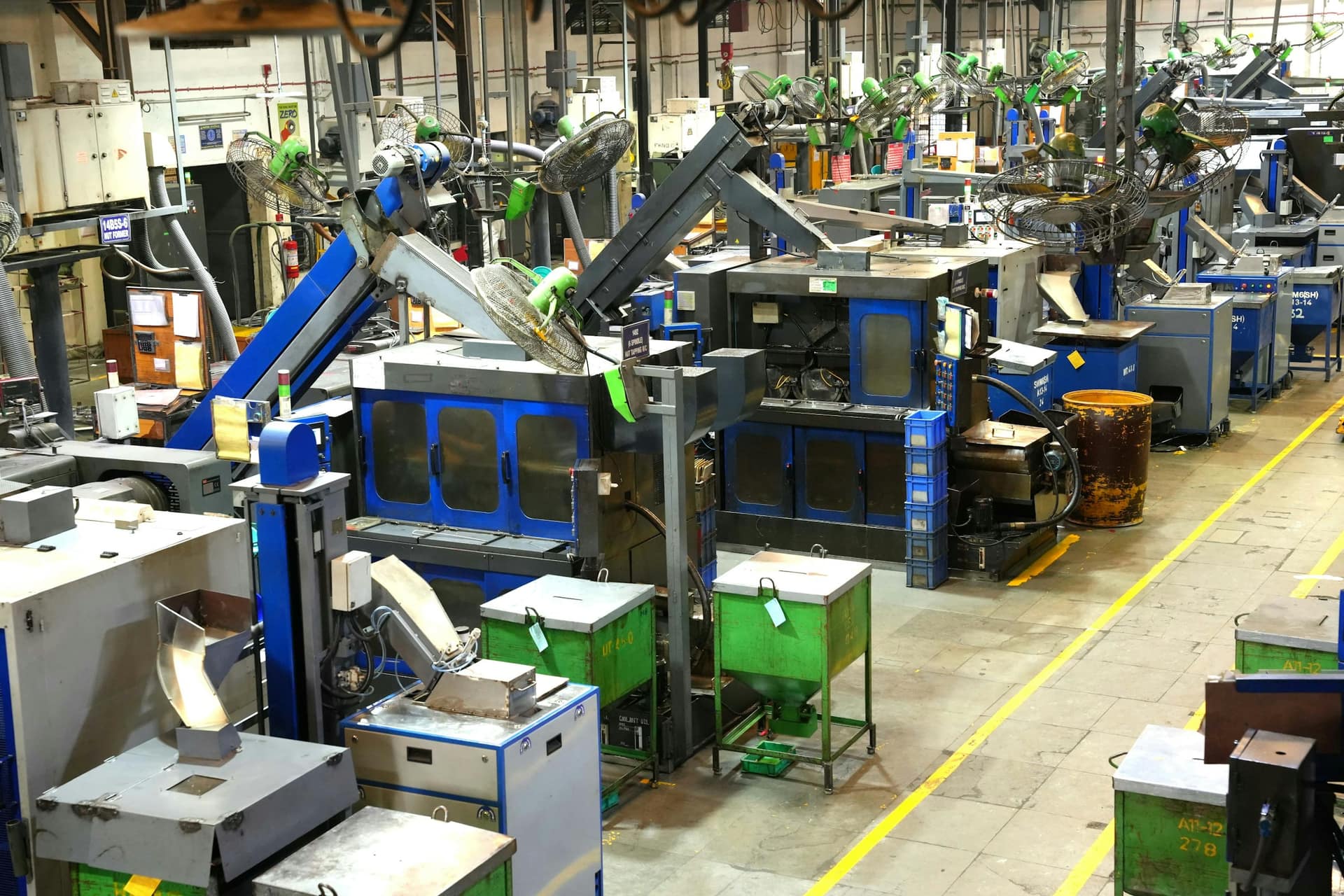
Photo: MGR P / Unsplash

Updates

Business opportunity · IBC resolution process

Take over a company that carries over ₹180 crore of tax losses

A private limited company is being taken over through the insolvency resolution process, and the acquirer is open to a buyer or co-investor. It has no running business, staff or fixed assets. What it carries is tax value, for a profitable, GST-paying business that is run inside it.

Business losses carried forward
₹180 crore+
Income tax; returns processed for every year
GST input credit
₹9.7 crore
In six States; the largest, about ₹6.6 crore, in Haryana
Use the losses by
AY 2030-31 to 2033-34
Year by year; the earliest lapse first

What the losses can be worth

  • Profit of ₹5 crore a year₹7.6 crore of tax

    ₹30 crore of losses used

  • Profit of ₹10 crore a year₹15.1 crore of tax

    ₹60 crore of losses used

  • Profit of ₹20 crore a year₹30.2 crore of tax

    ₹120 crore of losses used

  • Profit of ₹30 crore a year₹45.3 crore of tax

    ₹180 crore of losses used

Tax set off over six years from FY 2027-28, by the profit your business earns inside the company each year. Worked at a tax rate of 25.168%, not discounted. An illustration, not a forecast.

Suits a profitable manufacturing or trading business, best of all one that bills from Haryana.

The losses can be set off only against the company’s own future profits, in the years the Income-tax Act allows. Whether they carry forward after the change of ownership depends on the conditions of that Act and on the resolution plan as approved. The GST credit can be used only against output tax in the same State.

The take-over is subject to approval of the resolution plan by the Committee of Creditors and the National Company Law Tribunal, and a buyer must be eligible under section 29A of the Insolvency and Bankruptcy Code, 2016. Figures are rounded, taken from the papers of the process, and unaudited for the latest years.

This is not an offer or an invitation to the public to subscribe to securities, and not tax advice. Details are shared with serious buyers only, after a confidentiality undertaking.

Schemes a Unit Can Claim
87
States + Central
4
Eligibility Check
Free

Subsidy Eligibility Report · ₹2,999 + GST

Know your subsidy money in writing, before you spend a rupee on the project

Our expert team works out every scheme your project can claim and what each could be worth to you, on your own site and figures. Ready in 3 working days. The full ₹2,999 is adjusted against our fee for any work you give us within 90 days, so the report costs nothing if you go ahead.

  • Area category of your exact site
  • Every scheme that fits, central and State
  • A rupee estimate for each scheme
  • What can be combined
  • The steps that must come first

Schemes can be combined

Illustration: ₹60 Lakh manufacturing unit, Haryana

Sub-Prime area, ₹40 Lakh of eligible machinery, ₹40 Lakh term loan at 9% over 7 years, Small thrust-sector manufacturer

Capital Investment Subsidy 202625% of eligible capital expenditure
₹10 Lakh
Interest Subsidy 20267% a year on the reducing loan balance, first 3 years
₹6.6 Lakh
CGTMSECollateral-free
Total Benefit₹16.6 Lakh

Worked out with our subsidy calculator from the notified 2026 rates; SGST and stamp duty refunds would come on top. Actual rates depend on the unit's area category, sector and loan terms; a central scheme such as PMEGP cannot be combined with a State capital subsidy for the same unit.

See worked examples for five Haryana projects →

Open MSME schemes by State

View All Schemes
HaryanaState Subsidy

Haryana Progressive MSME & Export Promotion Policy 2026

Benefit
Capital Investment Subsidy + Interest Subsidy + Net SGST Reimbursement
Max Benefit
15–30% of eligible capital expenditure, up to ₹4 Crore
HaryanaState Subsidy

Haryana Interest Subsidy Scheme 2026

Benefit
Interest Subsidy on Term Loan
Max Benefit
5–7% interest subsidy, up to ₹20–25 Lakh per year
HaryanaTax Incentive

Haryana SGST Refund Subsidy Scheme

Benefit
Net SGST Reimbursement
Max Benefit
30–70% of Net SGST for 7 years
Knowledge Hub

Latest guides for MSME owners

Subsidies, GST, income tax and compliance — explained from the notifications, with the figures that apply this year.

All articles

Udyam Registration for Subsidies: Who Needs It, Documents and Which Schemes Ask for It

Udyam registration is free, paperless and permanent, and it is the first document most MSME subsidies ask for: 54 of the 94 open schemes in our catalogue list it. Who should register, what you need (Aadhaar, and PAN and GSTIN for companies, LLPs and trusts), how Udyam fixes the category that decides your subsidy, and how to keep it current so a claim is not held up.

Subsidy Setu Editorial Team
Income Tax 6 min read

TDS and TCS Returns Under the Income-tax Rules 2026: New Form Numbers and Due Dates

From 1 April 2026 the quarterly TDS statements are Forms 138 (salary), 140 (other residents) and 144 (non-residents), the TCS statement is Form 143, and all four are due 31 July, 31 October, 31 January and 31 May. The TCS date moved from the 15th to the 31st. Certificates are Forms 130, 131 and 133, and from 1 October 2026 an individual buying property files Form 141.

Subsidy Setu Editorial Team
Finance & DPR 6 min read

MUDRA Loan 2026: Shishu, Kishor, Tarun and Tarun Plus Limits, Who Qualifies and How to Apply

MUDRA loans under PMMY go up to ₹20 lakh for non-corporate, non-farm micro businesses: Shishu up to ₹50,000, Kishor to ₹5 lakh, Tarun to ₹10 lakh and Tarun Plus to ₹20 lakh for borrowers who have repaid a Tarun loan. Who qualifies, what it can pay for, where to apply (a bank, NBFC or MFI, or Udyamimitra), and why there is no subsidy and no agent.

Subsidy Setu Editorial Team

Frequently asked questions

What is Subsidy Setu?

Subsidy Setu is an execution platform that helps MSMEs identify eligible government subsidies, prepare Detailed Project Reports (DPRs), file applications, and manage post-sanction compliance across Haryana, Punjab, Rajasthan, Uttar Pradesh and central MSME schemes.

How does the eligibility checker work?

Our eligibility checker asks 7 key questions about your business — type, location, industry, investment amount, and registration status. Based on your answers, we match you with eligible schemes and estimate your potential benefit range.

What is a DPR and why do I need one?

A Detailed Project Report (DPR) is a comprehensive document that includes your project details, financial projections, market analysis, and scheme-specific requirements. Most subsidy schemes require a professionally prepared DPR for application.

What is scheme stacking?

Scheme stacking means applying for multiple compatible subsidies simultaneously. For example, a State capital subsidy, an interest subsidy on the term loan and a credit guarantee pay for different things, so together, within each scheme’s no-double-claim rules, they can add up to more than any one of them alone.

Which states do you cover?

We currently cover MSME schemes in Haryana, Punjab, Rajasthan and Uttar Pradesh, along with all central government MSME schemes like PMEGP, CGTMSE, and others applicable nationwide.

How long does the subsidy process take?

Timelines vary by scheme. Typically, eligibility review takes 2-3 days, DPR preparation takes 7-15 days, and filing to sanction can take 45-180 days depending on the scheme and authority.

Do you handle the filing process?

Yes. Subsidy Setu provides end-to-end execution — from DPR preparation to application filing, document submission, follow-ups with authorities, and tracking through to disbursement.

Is my business data confidential?

Absolutely. All business documents and financial information are stored securely and handled under strict confidentiality clauses. We never share client data with third parties without explicit consent.

Next steps

Check eligibility yourself

Free, takes about two minutes.

Start the free check

Talk to our team

We reply within one working day.